Marlan Cotrim
Máximo Solar
The Sun dreams.
Every eleven years, its surface becomes agitated. Magnetic fields tangle, spots multiply, storms sweep across the corona, and jets of matter are ejected into space. Astronomers call this period the solar maximum. For a few months, the star seems unable to contain its own energy. Let’s imagine another story.
A traveler approaches the Sun. She does not observe it from a distance. As she advances, the boundaries between mist and mountain, between smoke and liquid, between skin and mineral, disappear. The solar surface is seen as a vast landscape. Eruptions resemble forests smoldering slowly. The spots take the form of caves, organisms, and landforms viewed from above.
Further on, the journey changes direction. Instead of heading outward, it descends. It crosses geological layers, traverses carbon deposits, and encounters dark veins compressed over millions of years. The Sun and the Earth’s interior come to share the same imaginary matter: heat, pressure, and transformation. Perhaps it is in this unlikely territory — between the center of the star and the center of the planet — that Marlan Cotrim’s works are situated.
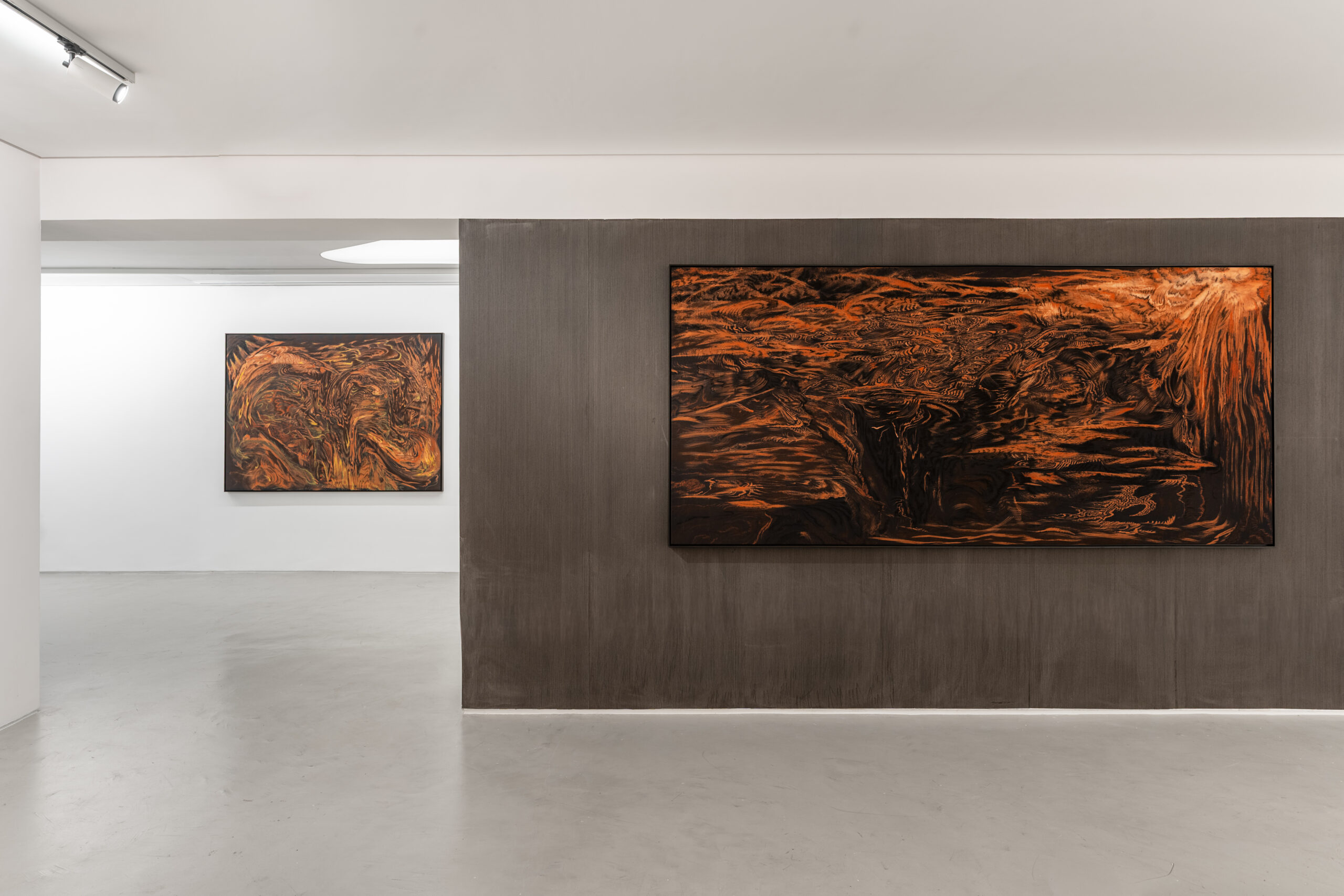
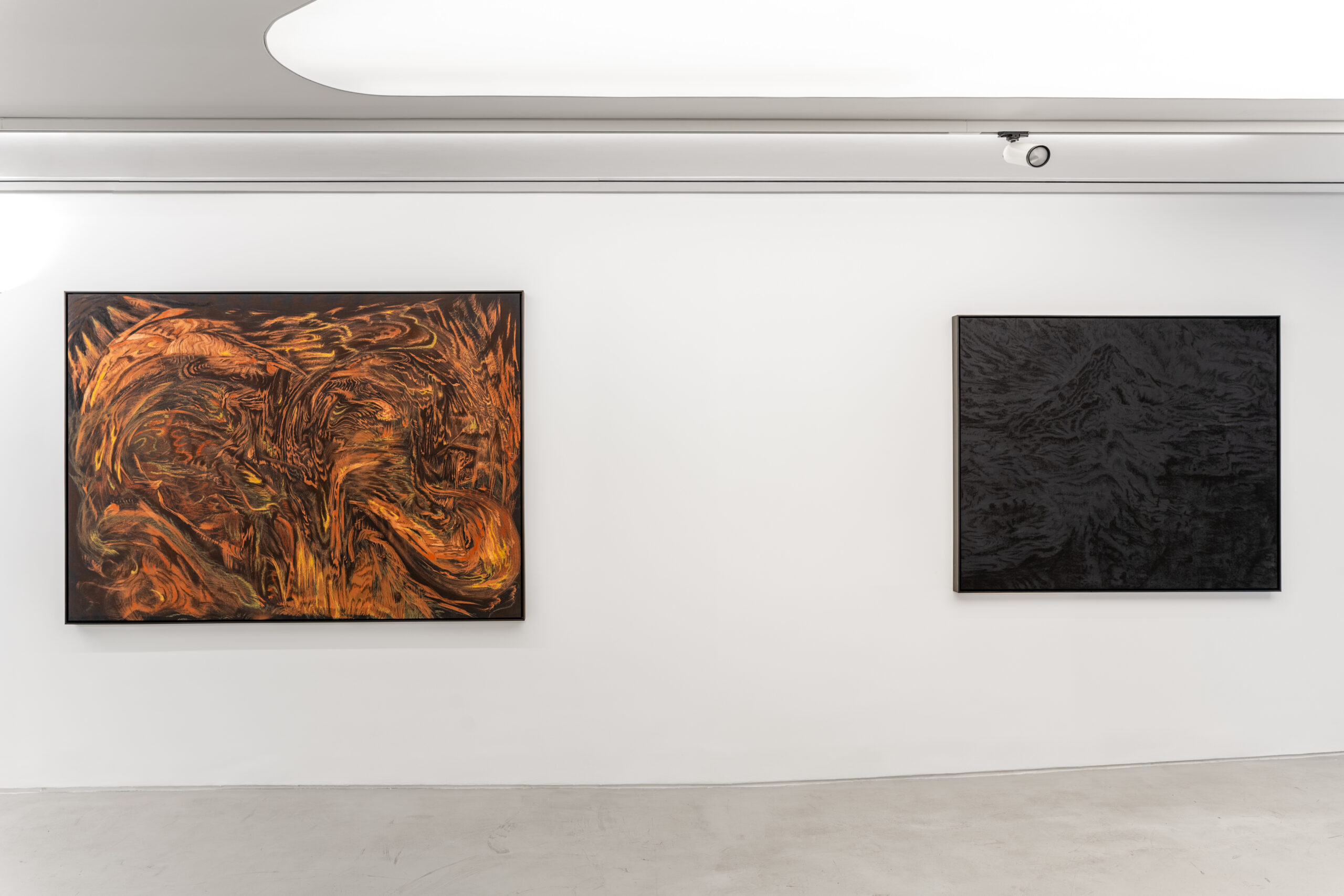
Marlan’s painting arises from the observation of materials subjected to heat: smoke, soot, charcoal, burnt surfaces, thermal currents, and mineral deposits. Her interest lies less in the stabilized form of these materials than in the movements that produce them. The images gathered in Máximo Solar follow processes of ascent and sedimentation, condensation and dispersion, emission and retention. Each canvas captures a moment when the material is still reorganizing itself.
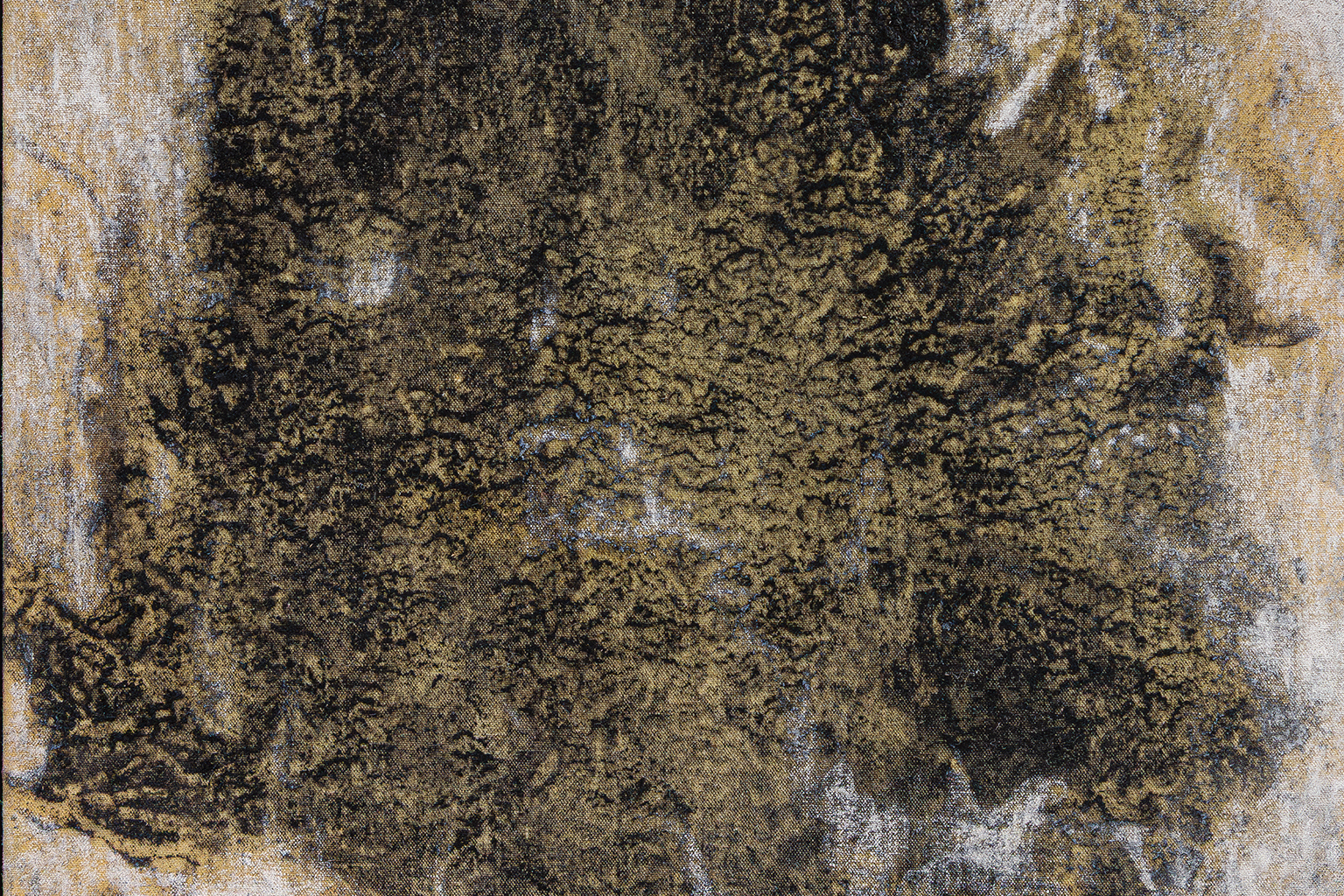
As in previous works, the artist develops her paintings from a direct relationship with the materials. On dark fabrics, chlorine corrodes pigments, opens fields of luminosity, and produces unpredictable paths. Charcoal reappears as a pictorial material, thickening surfaces, deepening shadows, and introducing another temporal depth to the image. The painting emerges from this encounter between chemical reaction, observation, and gesture. Marlan follows the paths the materials propose, intervenes, interrupts, and starts over. The result is surfaces that preserve the memory of the very process of their formation, revealing zones of opacity.
Coal occupies a central place in this research. As the remains of ancient forests transformed by geological forces, it brings together plant matter, mineralization, and accumulated energy. Its presence connects distinct timescales: the slow growth of a forest, the formation of a rock, and the combustion of a fossil fuel. In Geontologies (2023), Elizabeth Povinelli observes that the exploitation of coal deposits not only fueled modern industrialization but also helped produce the very geological imagination of the Earth, making visible strata of time that exceed human experience. In Marlan’s paintings, coal retains something of this condition. Each surface seems to bring together different speeds of matter within a single image.
In Queer Coal: Genealogies in/of the Blood (2015), we can think of coal not merely as an energy resource or a geological object, but as a material that preserves a solar lineage. Right at the beginning of the essay, Yusoff writes that fossil fuels are “pockets of sunshine” and possess a “solar line of descent.” In a Brazilian context, this solar lineage takes on additional layers. The heat accumulated in coal also refers to colonial economies built upon the transformation of vegetative landscapes into energy. Sugarcane, firewood, charcoal, and mining are part of the same history of combustion that traverses forests, plantations, furnaces, and working bodies. The energy stored in matter has never been merely a physical matter; it has also organized territories, forms of labor, and regimes of extraction. By connecting, Sun — plant — coal, it produces an energetic genealogy that traverses plant life, combustion, mining, and geological temporality.
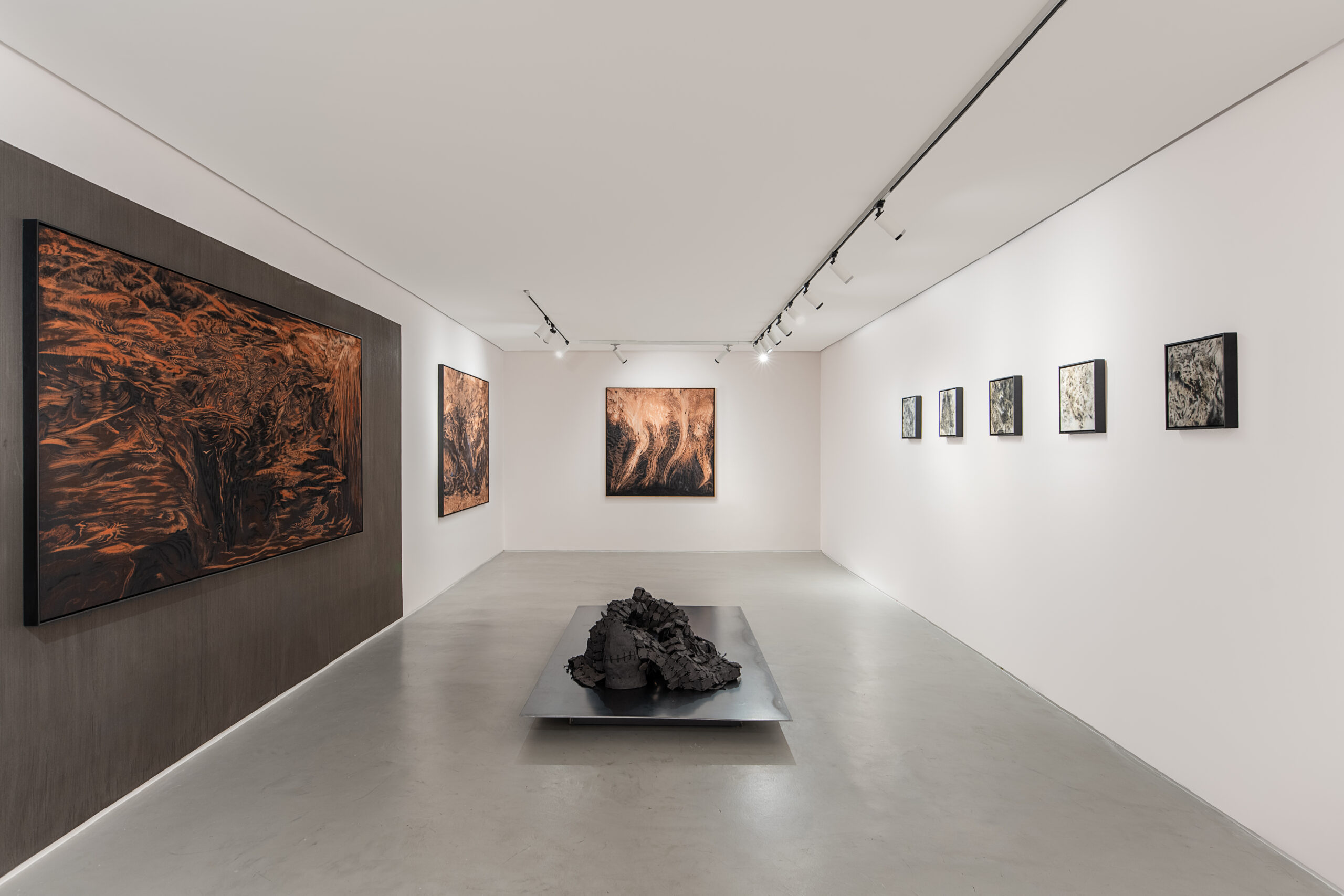
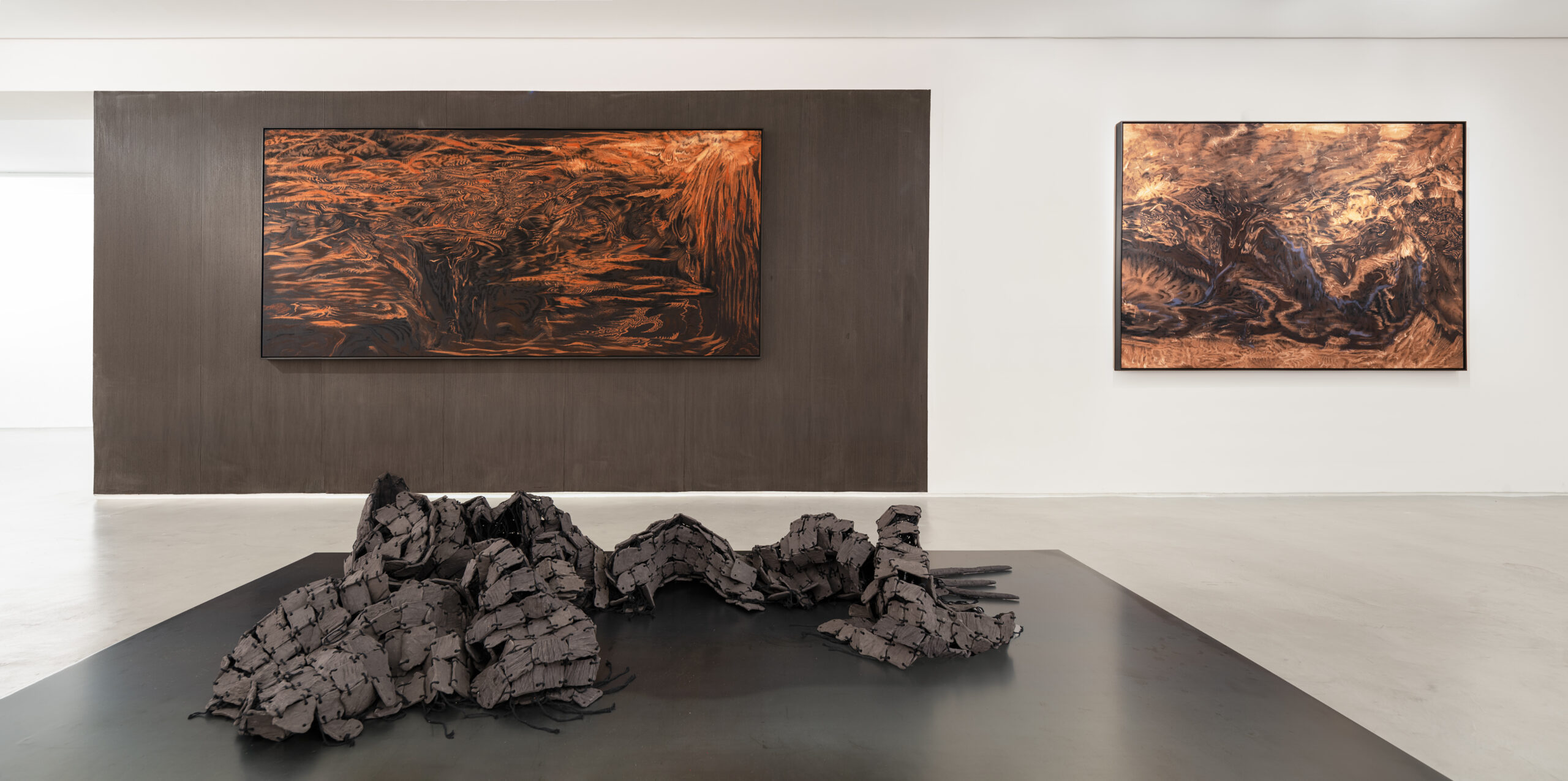
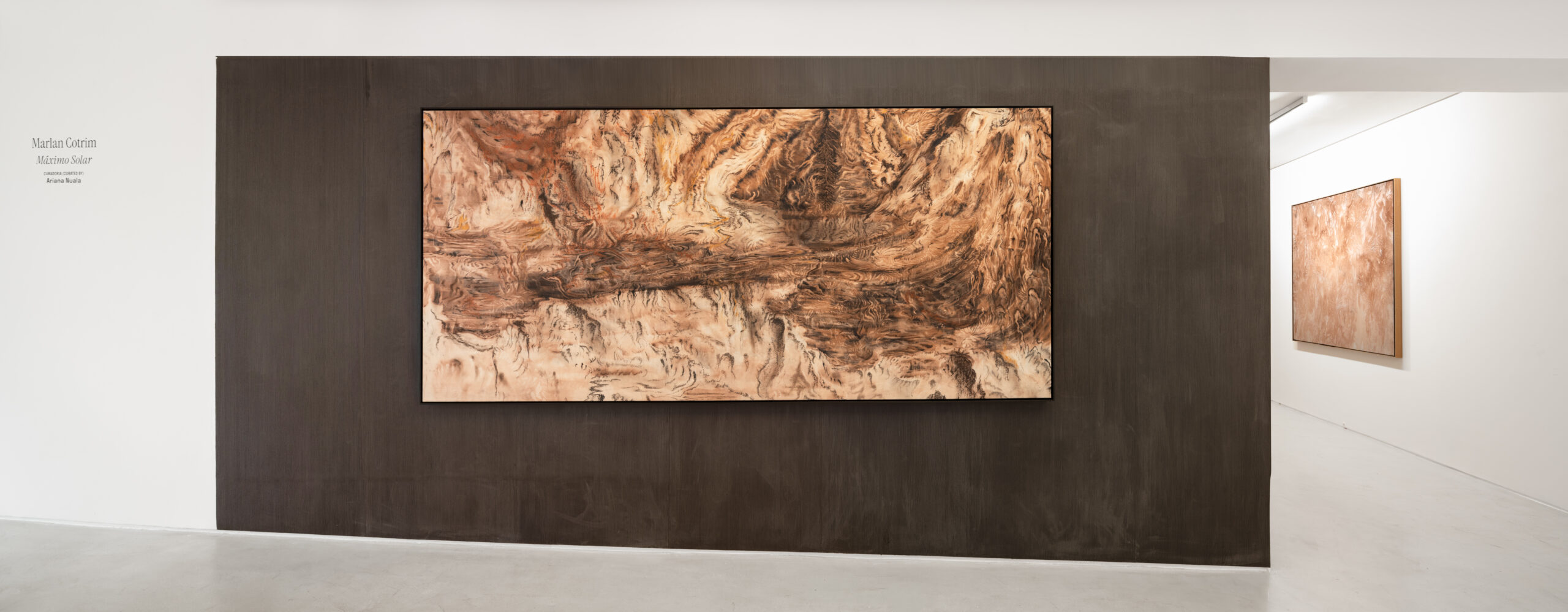
Two paintings depict the Sun at its peak. These are not astronomical representations, but rather exercises in layering images. The Sun appears as an organism in constant flux, a turbulent surface crisscrossed by sunspots, solar flares, and eruptions. Instead of the homogeneous sphere that frequently appears in scientific images, we find a star marked by internal turbulence, movements that continually alter its appearance.
The solar maximum designates precisely this moment of intensification. Magnetic activity increases, eruptions become more frequent, and the surface reveals its instabilities with greater clarity. The possibility of imagining the Sun as a landscape finds a parallel in In the Year of the Quiet Sun (2013), by the Otolith Group, a work that tracks solar phenomena to explore forms of duration that transcend the human scale. In Máximo Solar, the star also ceases to occupy the position of a cosmic backdrop. It becomes territory, observable matter, a field of imagination.
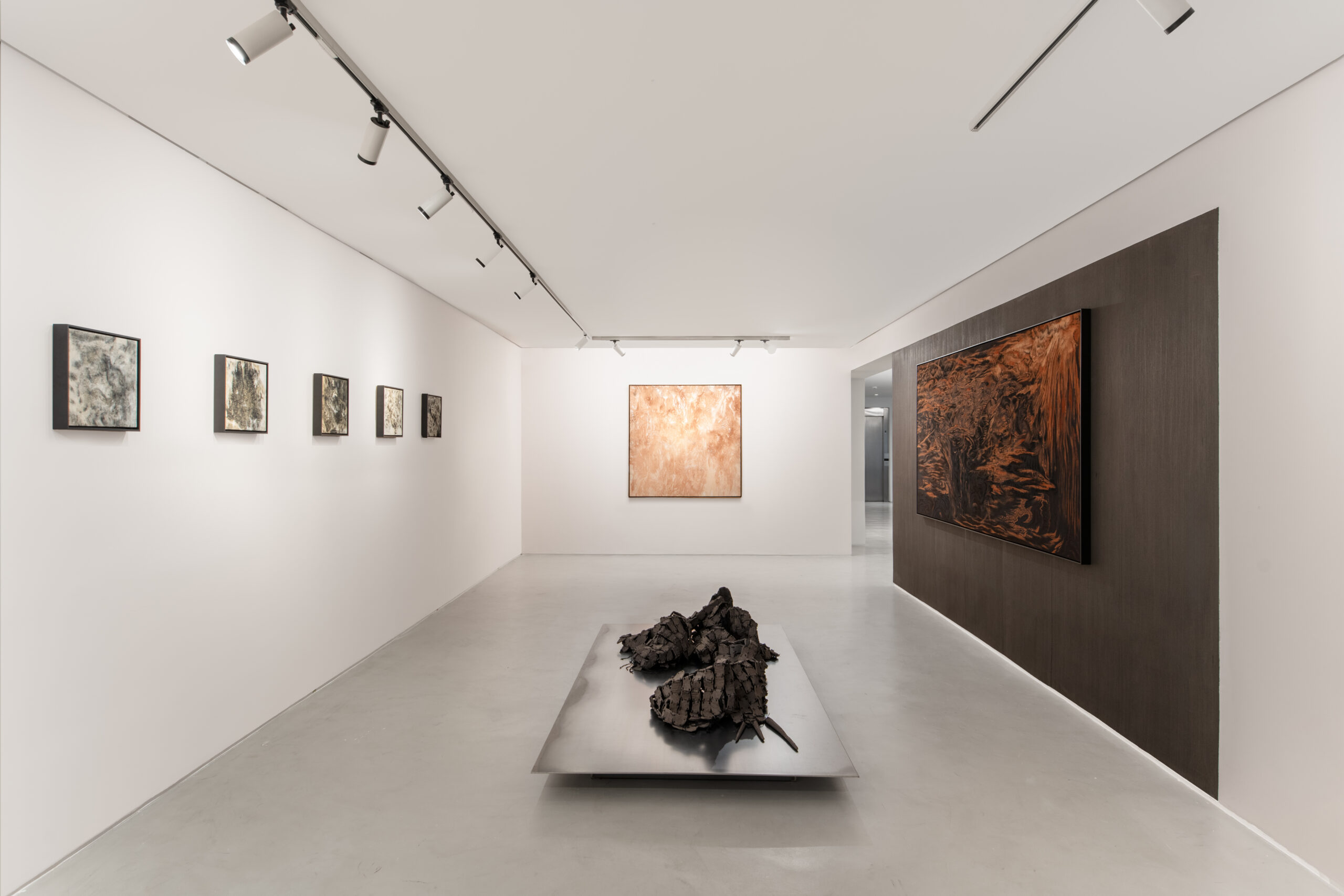
Surrounding these suns, other paintings expand an exploration of smoke. The forms that traverse the canvases may resemble thermal columns, volcanic clouds, river systems viewed from above, microscopic organisms, or mineral formations. None of these images remains static for long. The paintings sustain multiple scales simultaneously. What appears to be an atmosphere may also be a relief. What resembles a geological landscape may be a celestial body.
This ambiguity is reinforced by a recurring movement in the exhibition. Many of the shapes appear to rise; others seem to sink. At times we observe a column of heat rising. At others, dark matter slowly settling. The orientation remains uncertain. The canvases follow a continuous flow between surface and depth, between emission and condensation. The same movement connects smoke, lava, coal, cloud, and star.
Fiction arises precisely from this attentive engagement with the material. The images do not seek to illustrate a specific phenomenon. They unfold in a realm where observation, memory, and imagination coexist on the same plane. The stains, fissures, and densifications that traverse the paintings evoke geographies yet to be named, forms of life in gestation, landscapes that belong simultaneously to the Earth’s deep past and to futures still unknown. Each work seems to record a world in the making.
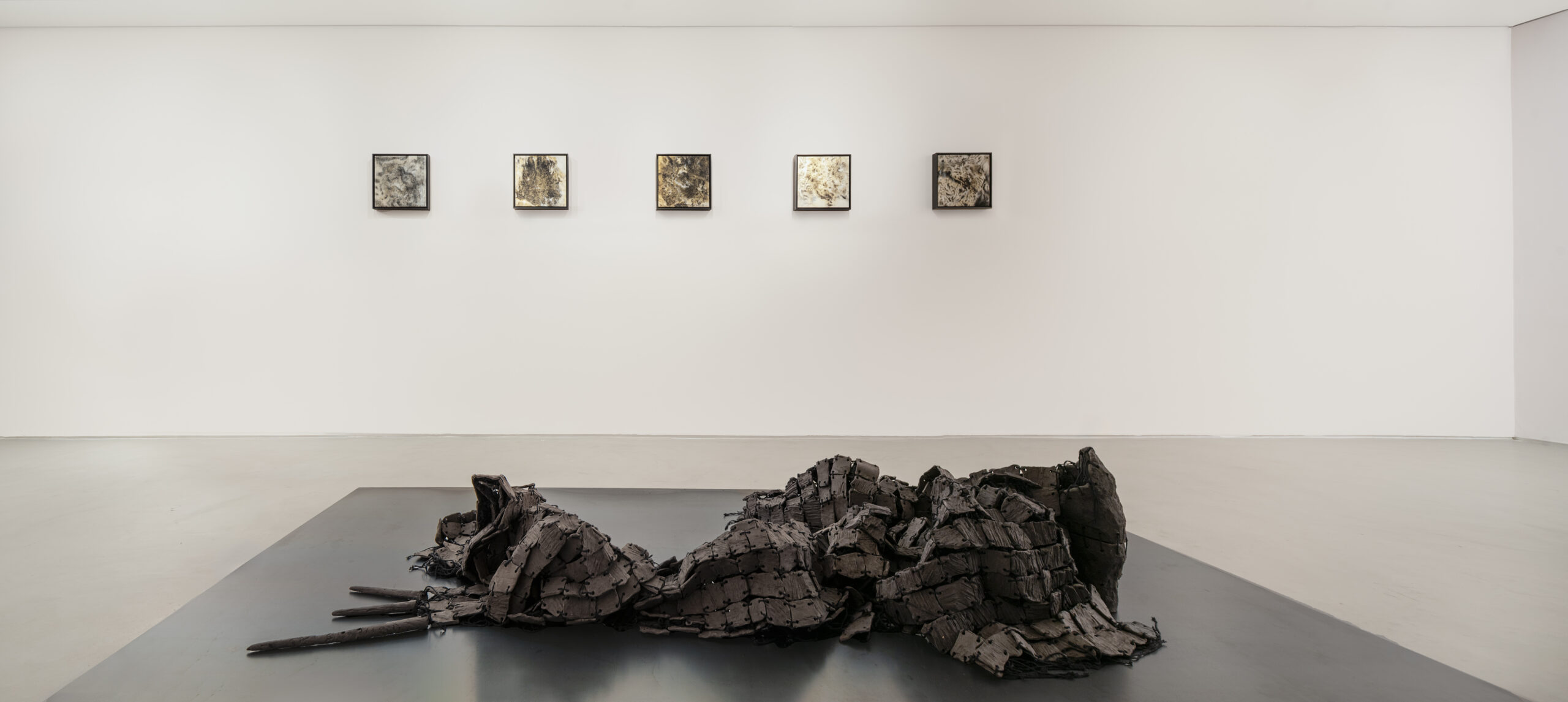
This thermal imagination finds a singular condensation in Dragon’s Sleep (2026), the exhibition’s sole sculpture. Molded in black clay, the work brings together observation of nature, mythological memory, and the study of matter. The dragon appears asleep, but its stillness does not indicate an absence of strength. The repose holds accumulated energy, similar to the pressure preceding a volcanic eruption or the invisible activity preceding a solar storm. The sculpture introduces another important dimension to the artist’s research: the possibility of perceiving the landscape as a living entity. Mountains can take on animal forms, clouds can acquire bodies, mineral veins can become creatures.
Between the glow of the stars and the fossil darkness of coal, between rising smoke and settling matter, these works traverse territories where geology and cosmology share a common history. The heat emerging from the Earth’s interior, the energy emitted by the Sun, the carbon stored in rocks, and the atmospheric movements that traverse the planet appear here as parts of the same cycle of transformation. As we inhabit these images, we discover that the center of the Earth and the surface of the Sun may not be such distant places. Both belong to a long history of combustion, metamorphosis, and imagination.
Ariana Nuala
Works
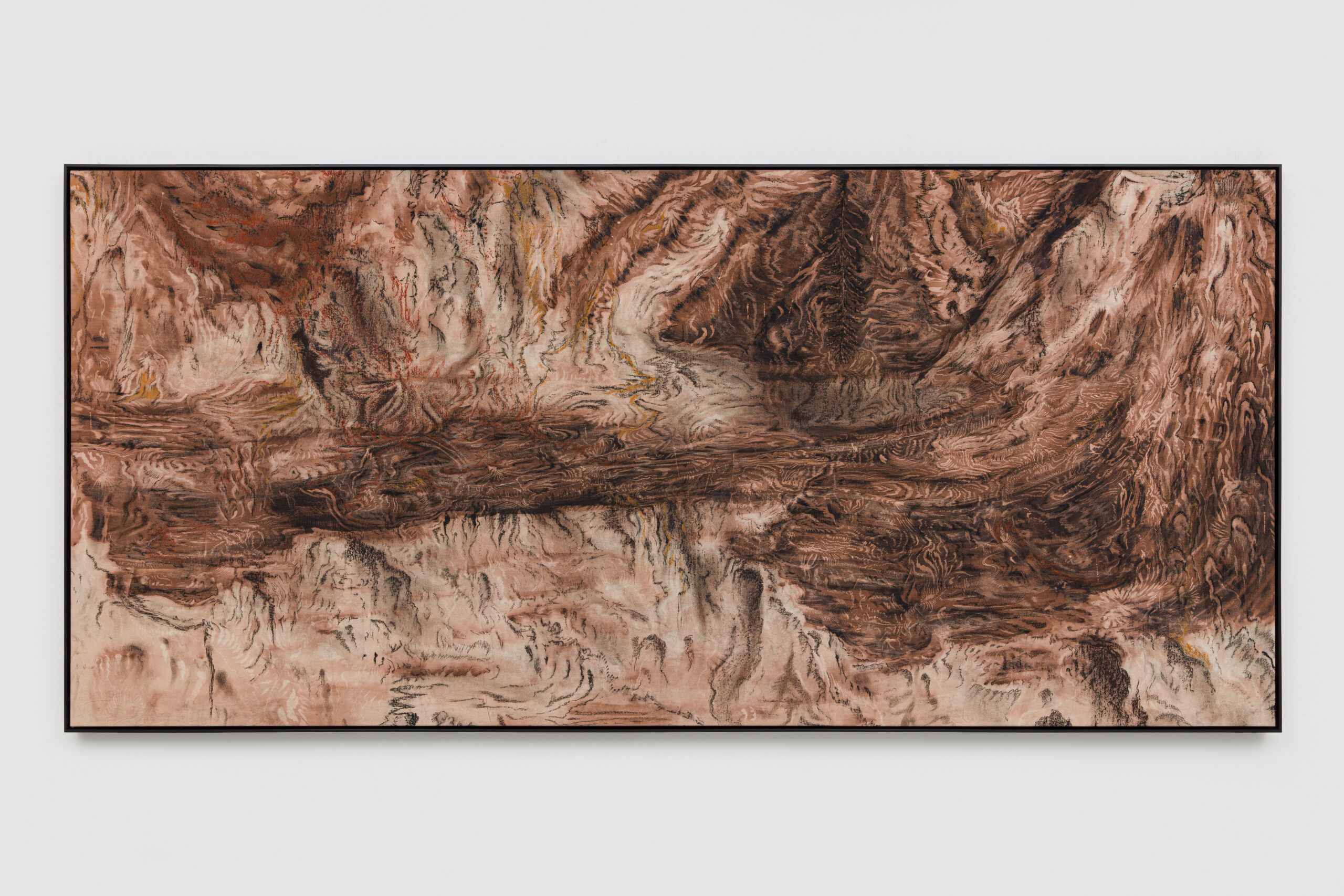
1700°C
Marlan Cotrim, 2026
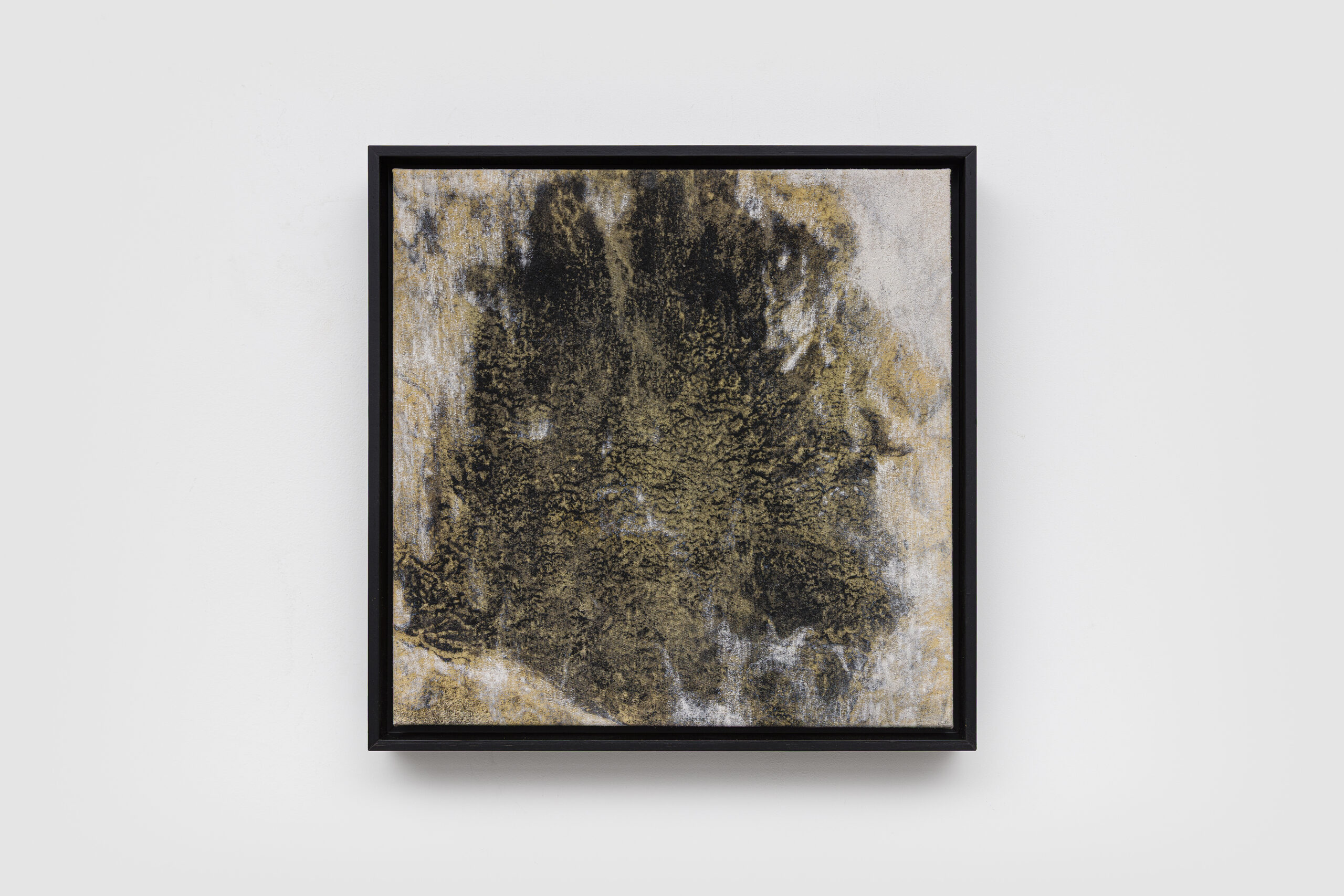
Segredo de fumaça 01
Marlan Cotrim, 2026
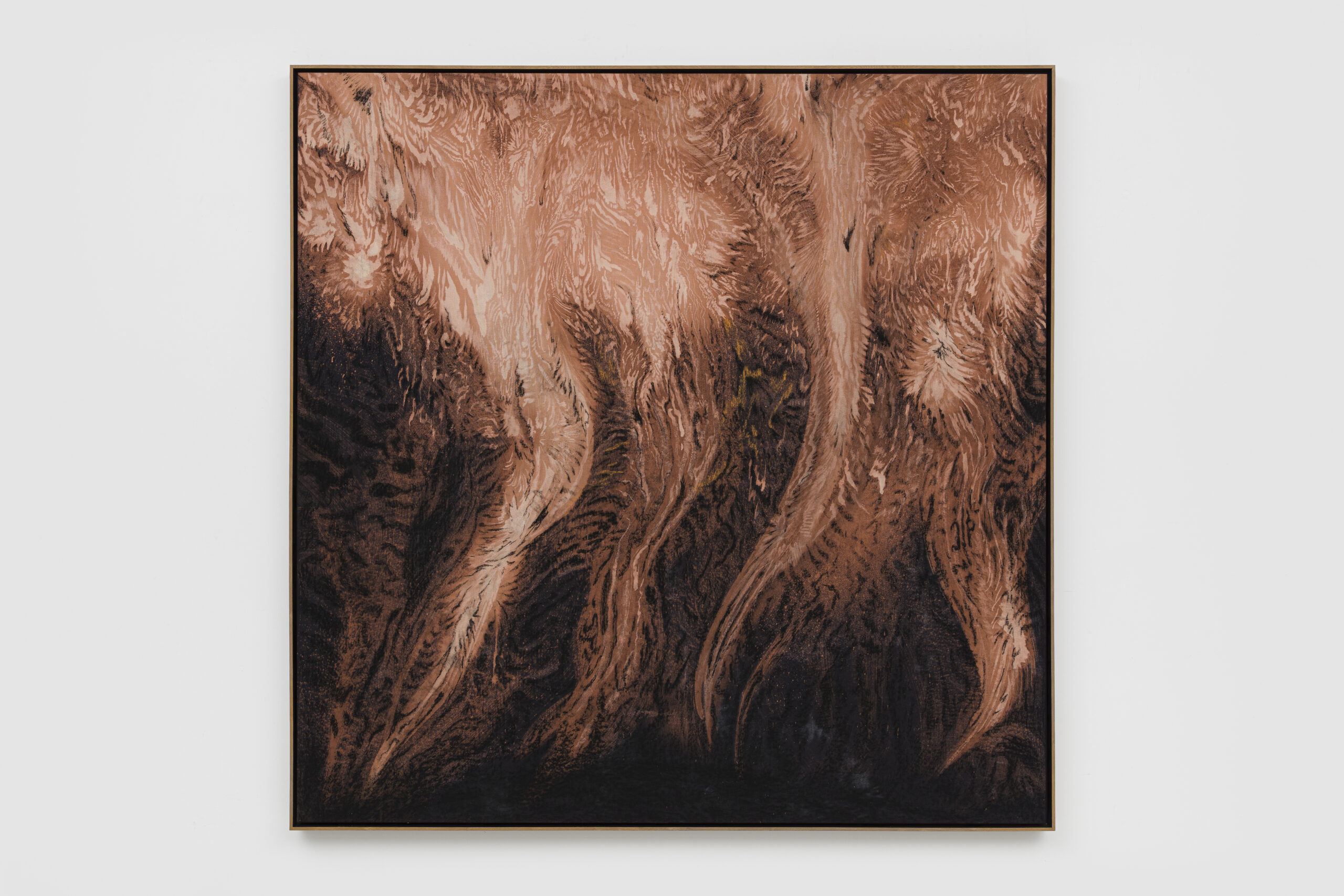
Máximo solar 01
Marlan Cotrim, 2026


Exhibition Views