
Coming soon
Gi Monteiro: Umbra
Critical Essay
Renato Menezes
Exhibition
Gi Monteiro: Umbra
“Ce qu’il y a de plus profond dans l’homme, c’est la peau.”
Paul Valéry, L’Idée fixe (1932)
There is no room for straight lines in Gi Monteiro’s research. More than a geometric decision, this is, at once profoundly and superficially, a question of a philosophical nature, one that seems, at every turn, to find support in the elements that make up the operative function of the Fold (le Pli), according to the definition Deleuze gave it. Unlike the straight line, which presupposes a rationalist claim to exactness, and upon which also rests a certain expectation of an always-deferred encounter with objectivity, the fold, for its part, admits the irregularity and torsions of baroque drama, the symbolic condensation of allegory, the abrupt contrasts between light and dark areas, imprecision, transversality, the mise-en-abîme (the effect of infinite mirroring). Because of these characteristics, the fold is more attuned to the curves of the unconscious and the knots of contradiction, just as it moves, with greater ease and comfort, through the field of magic and the mystery of potential forms in a state of latency. As the motor of a diagonal, discontinuous, organic force — the manifestation of the drive toward abundance — the fold appears in Gi Monteiro’s work through the line of the cursive letters “e,” “s,” and ‘c,” whose forms suggest a continuous movement of going and returning, comparable, in the end, to the flow of ocean waves — a recurring motif of baroque architecture — but also to the circulation of blood through the body’s vessels. Between volutes and shells and blood vessels, what they share is not only the notion of flow, from which dance follows (a practice the artist has been nurturing within her creative process), but also another, more elusive movement, tied to the uncapturable, the ineffable, becoming as such.
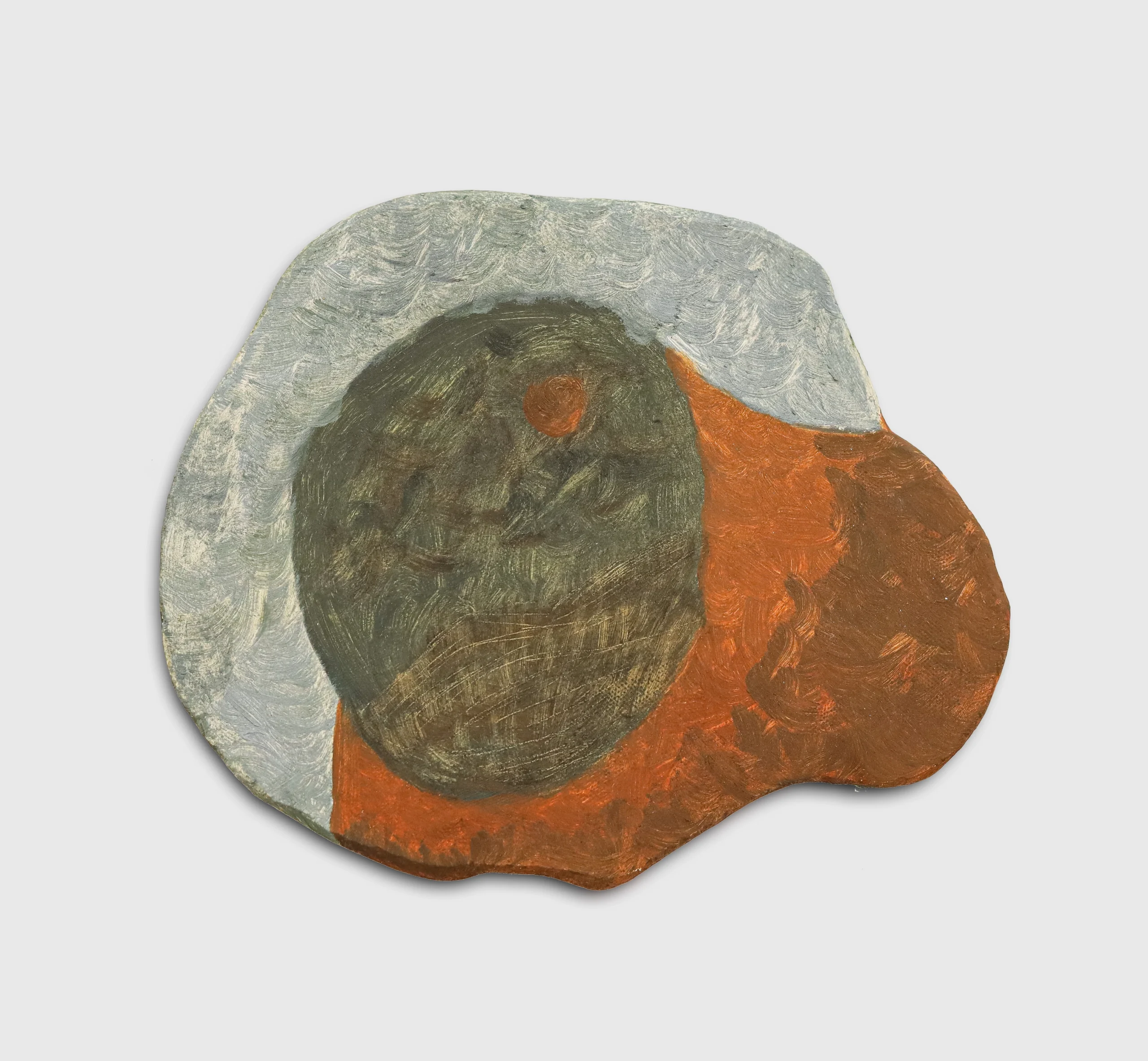
It is precisely from this ambiguity that one of the most coherent series Gi Monteiro has yet produced emerges: Nevoeiro, begun in 2025. In it, the artist carries out two sequential actions — drawing and cutting — the second determined by the first. The shapes, generated by long, curving strokes on black cotton canvas, close in on themselves, creating zones of subtle, almost metallic color that linger residually against the nocturnal background. This recalls, on one hand, the very formation of clouds as condensed water, an intermediate stage between evaporation and precipitation: their only tangible moment is precisely the one the hands cannot touch, leaving the eyes to imagine within them figures that answer to our intuitions (and, indeed, our intentions). On the other hand, these closed forms also do not let us escape their dimension both closer to and, at once, more distant from our everyday lives: data clouds, which store the thousands of pieces of information we produce in an imaginary, virtual, dematerialized place, yet one that is safe, free from attack or dissolution. Fogs also concern distance: up close, we find ourselves on the verge of being inside it; from afar, it finally exists, but this time the experience of the phenomenon will be purely contemplative. There is, in this series, a degree of imprecision, the product of bringing the dramatic, baroque form together with the fluid form of condensed water, giving rise to energies that are reworked in two other, closely related series: Sementes and Recém nascida.
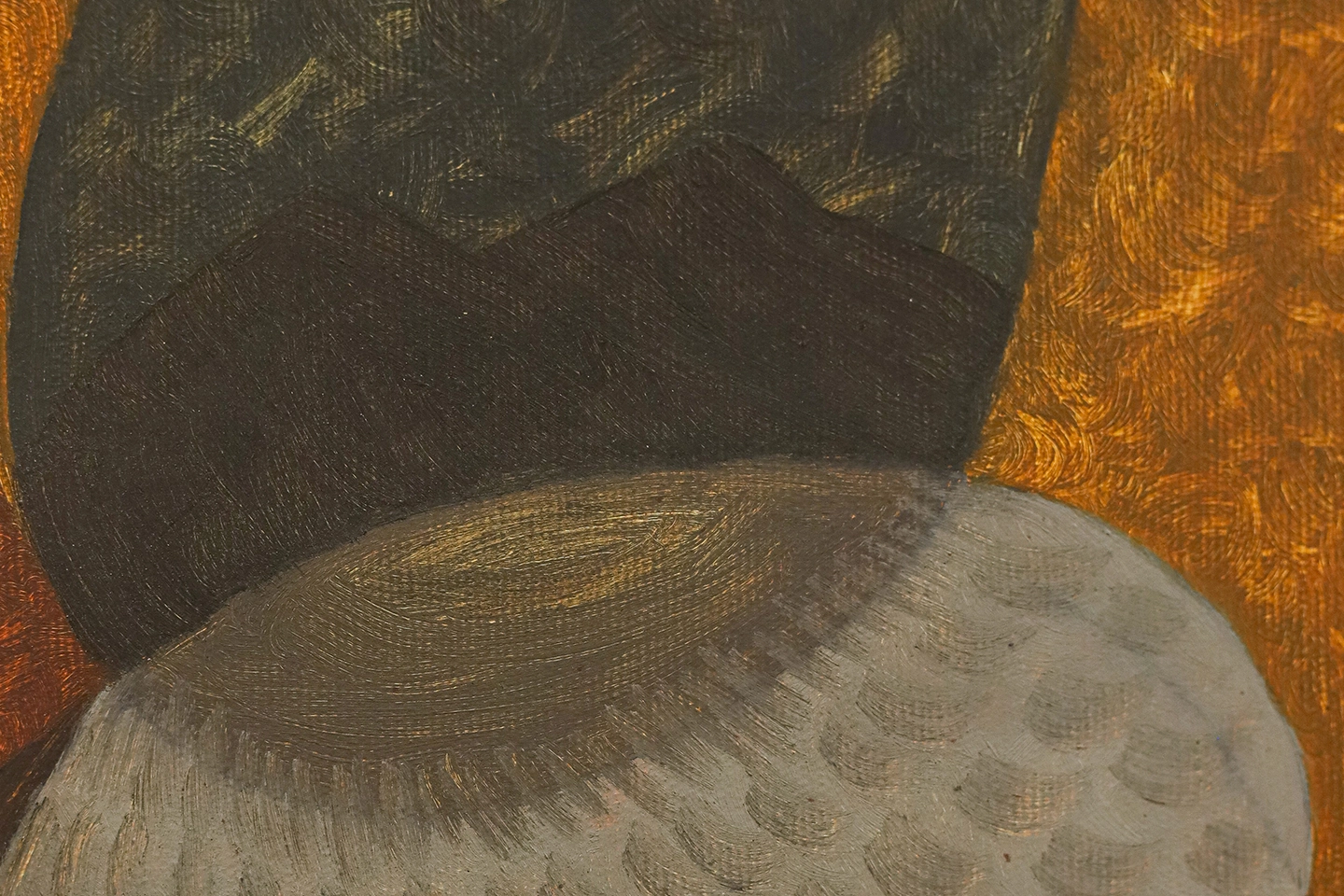
If, in Sementes, Gi Monteiro is interested in the contained form of the mature, already fertilized ovule of the plant to come — and thus in its latent state of life — in Recém nascida, the focus of her research seems to shift toward the complementary opposite of that first phenomenon: the initial instants of contact between the body and the “space outside,” the first experience of freedom. Running curiously between one series and the other is a notion of the transmission of genetic code, guarantor of both heredity and opportunity — of mutation, of transformation, cast toward the future. In both Sementes and Recém nascida, the twisted, ellipsoidal forms seem to evoke the schematic structure of DNA, as though they contained within themselves the genetic instructions of their respective existences, from their shared traits to their distinctions, revealing within them something infinite contained in the whole form, a direct descendant of the topology of the Möbius strip. Germination and birth, constitutive stages of life’s early phases, thus bring to the surface the mystery of continuity, twisting the apparent linear coherence of the subject’s process of evolution.
Sementes and Recém nascida, together, return us to the Nevoeiro series through a trait they share: the dark, deep, somber background against which the forms seem less to settle than to slowly happen. Seeds, fogs, and newborn bodies place themselves in the world at the threshold between two states: the seed holds a life that has not yet acquired form; the fog renders visible a matter that could disappear again at any instant; birth casts outward what, until then, existed enveloped within another body. In none of these cases does the transformation occur in a straight line. It demands contractions, expansions, detours, ruptures, and folds; it demands, above all, that one form momentarily abandon the security of its contours so that another may, at last, emerge.
Renato Menezes
Art historian and curator
Works
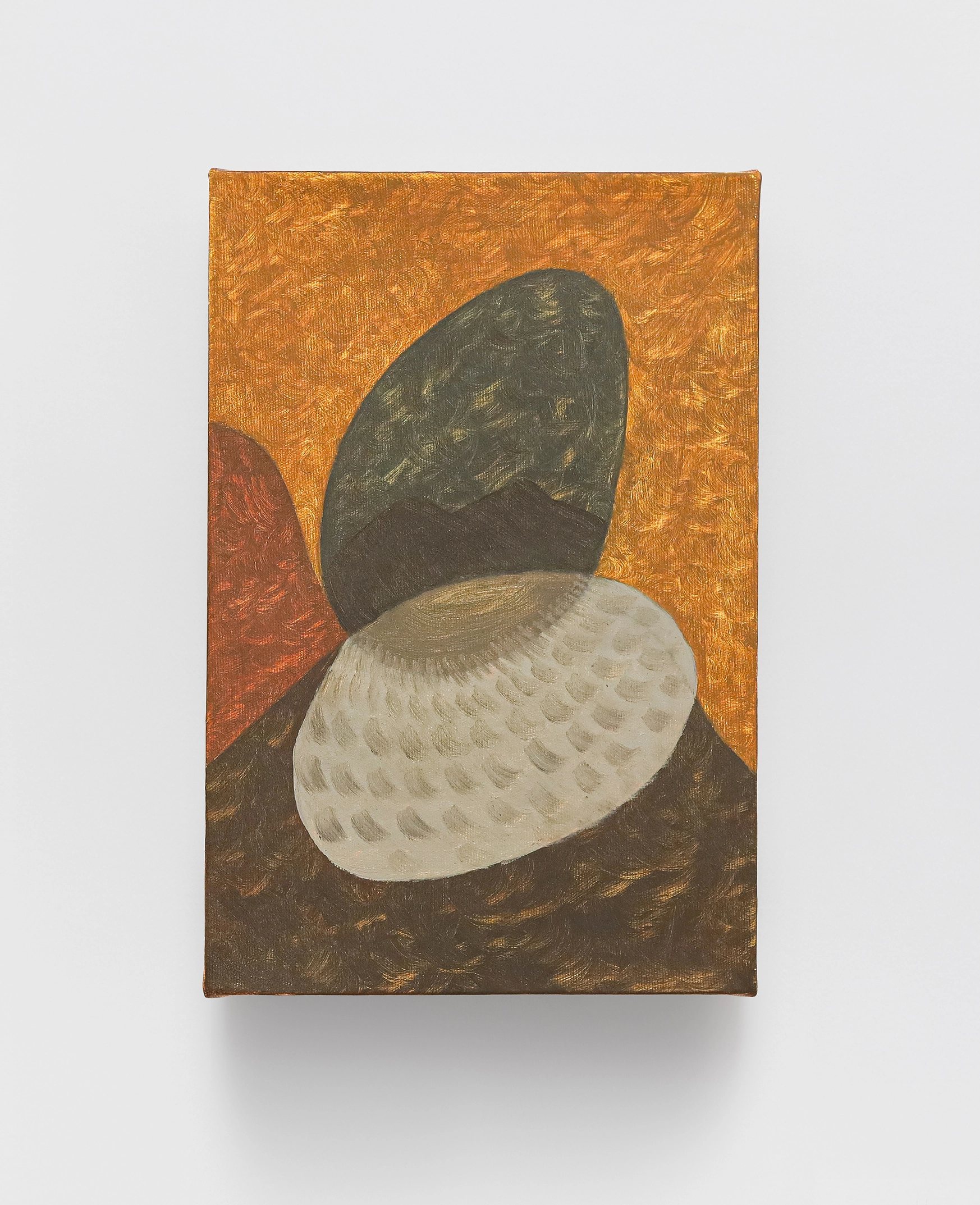
Senda
Gi Monteiro, 2026
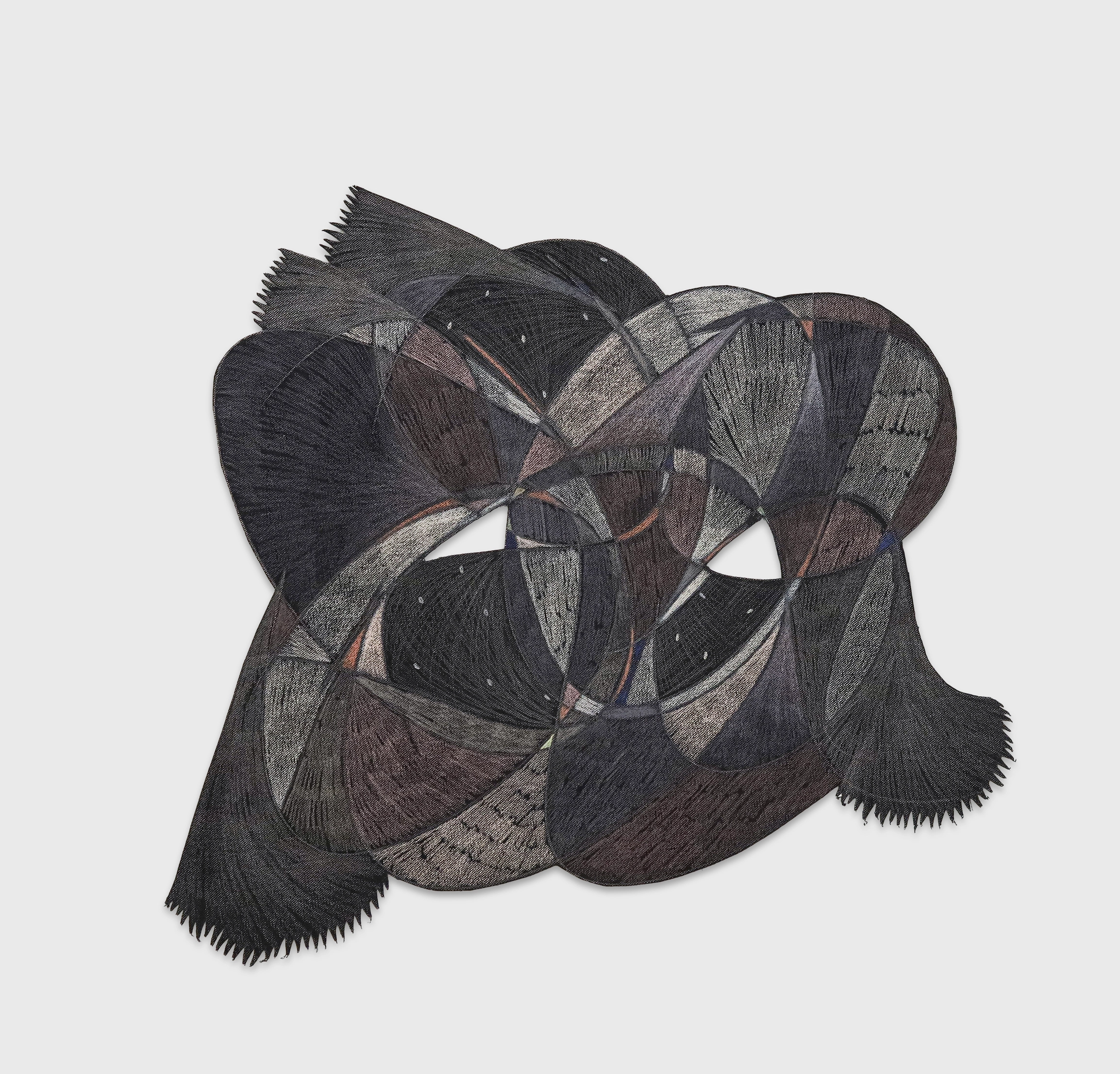
Fluente condensação
Gi Monteiro, 2026
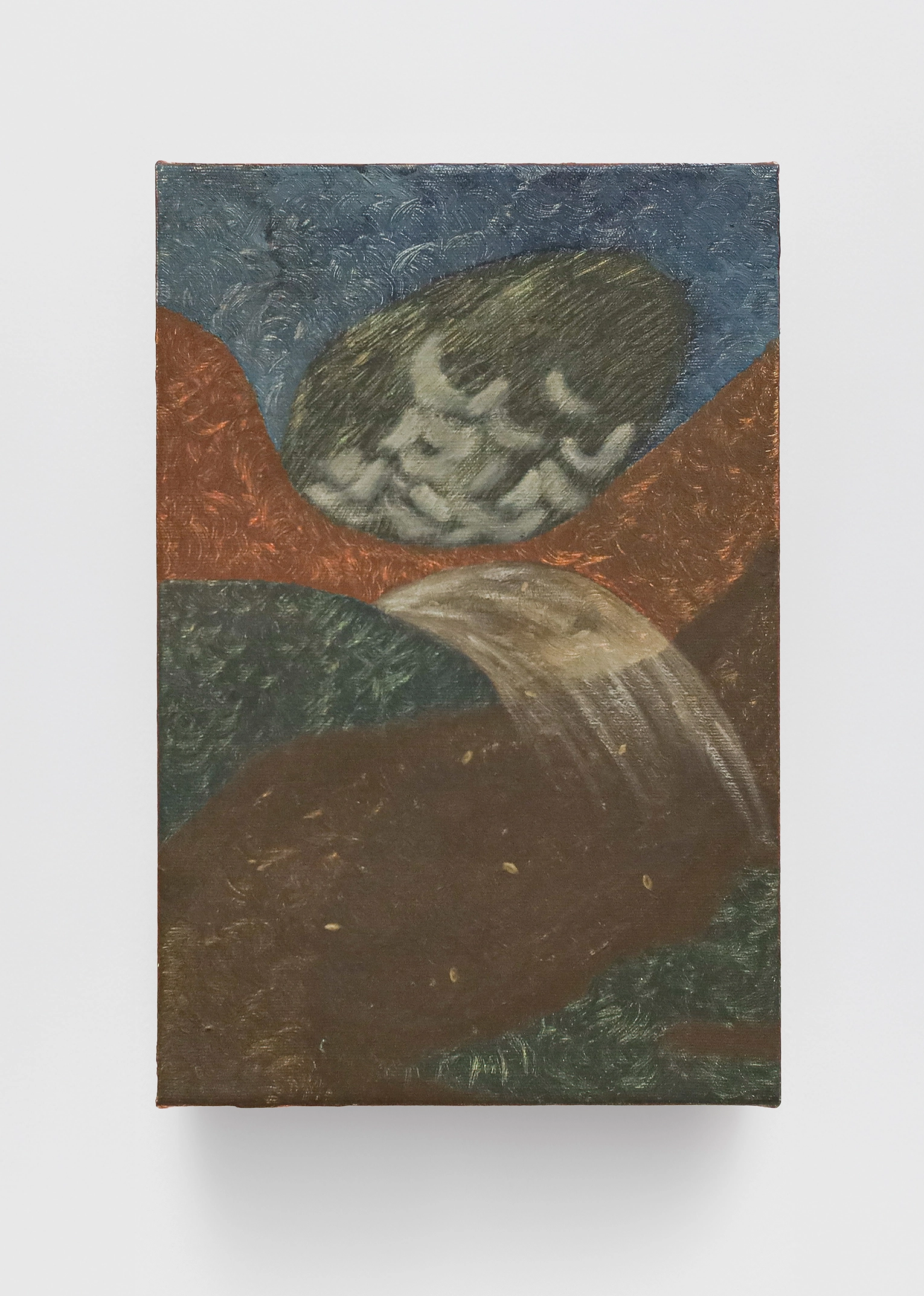
As pedras e a cachoeira
Gi Monteiro, 2026
Untitled
Gi Monteiro, 2026


