
Paulo Pasta: Gravuras de Barcelona
Critical essay
Antonio Gonçalves Filho
About the exhibition
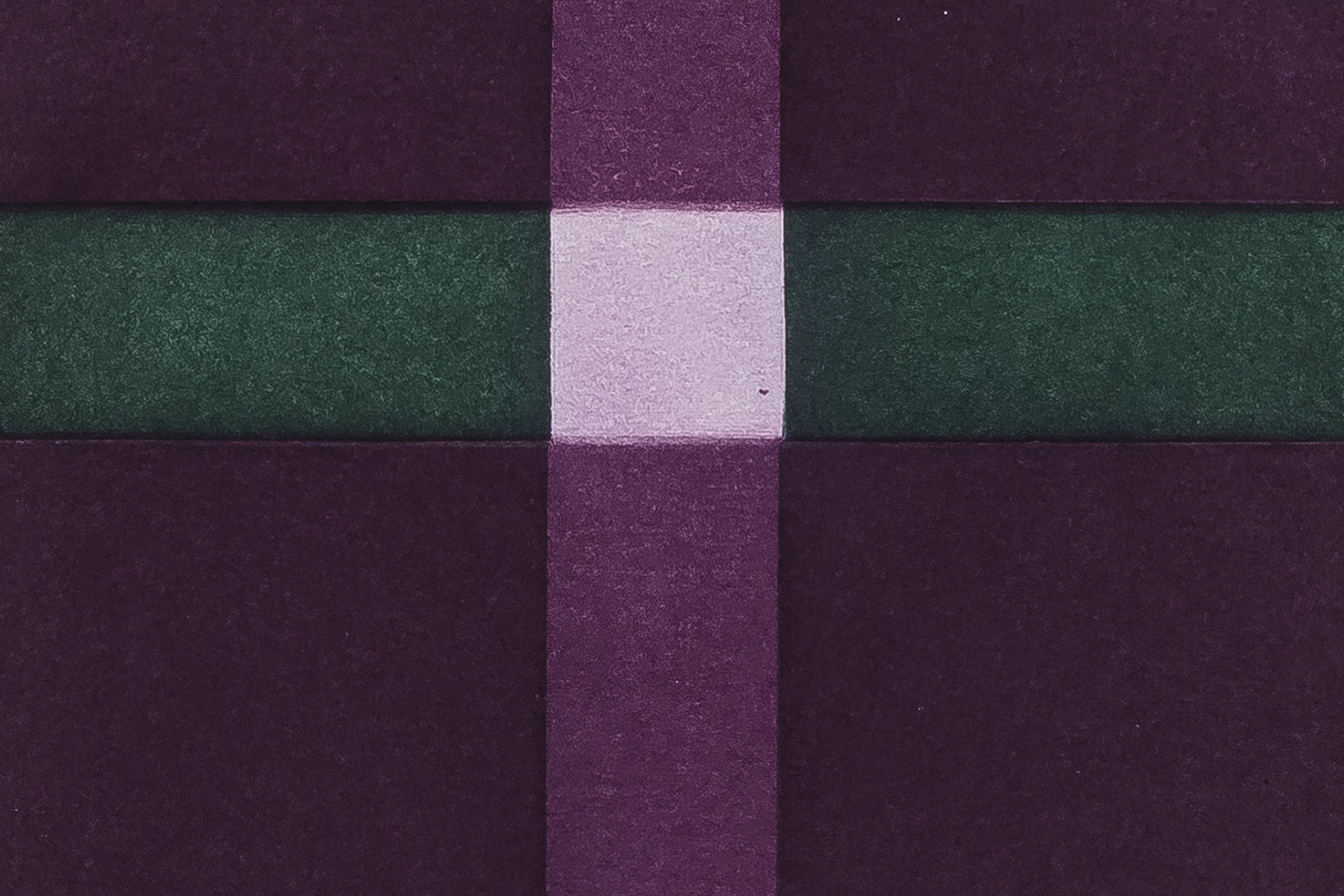
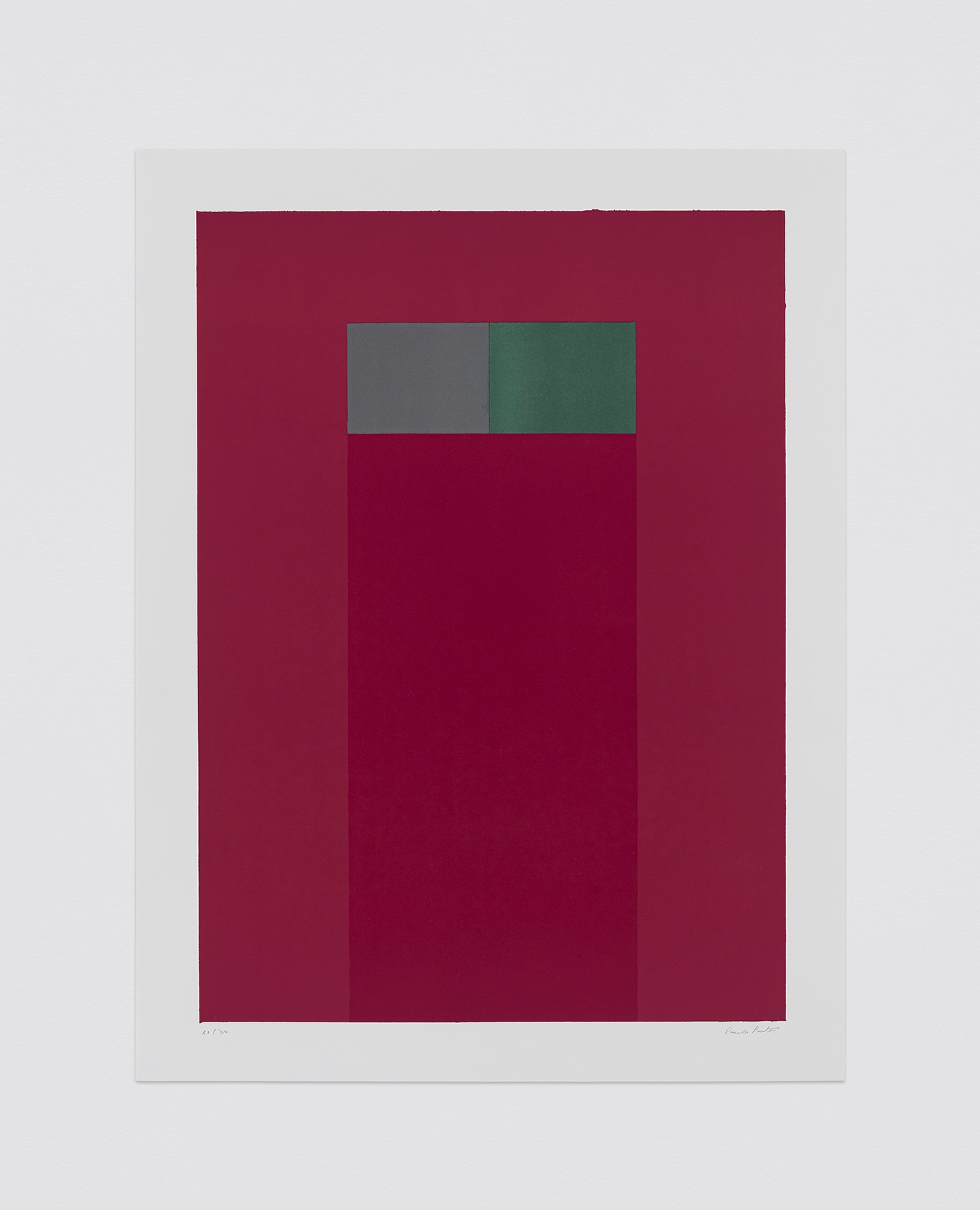
The series Gravuras de Barcelona [Barcelona Prints], by Paulo Pasta, as the title indicates, was produced last year in the cultural capital of Catalonia. The nine works came out of the Polígrafa print workshop, a world reference that has printed works by Pablo Picasso, Joan Miró, Max Ernst, and Francis Bacon, among more than three hundred historic artists. Regarding the technical excellence of these lithographs and metal engravings, then, it would be redundant to speak. However, it is necessary to emphasize the role of the series within Pasta’s graphic work, which differs from his pictorial work in many respects.
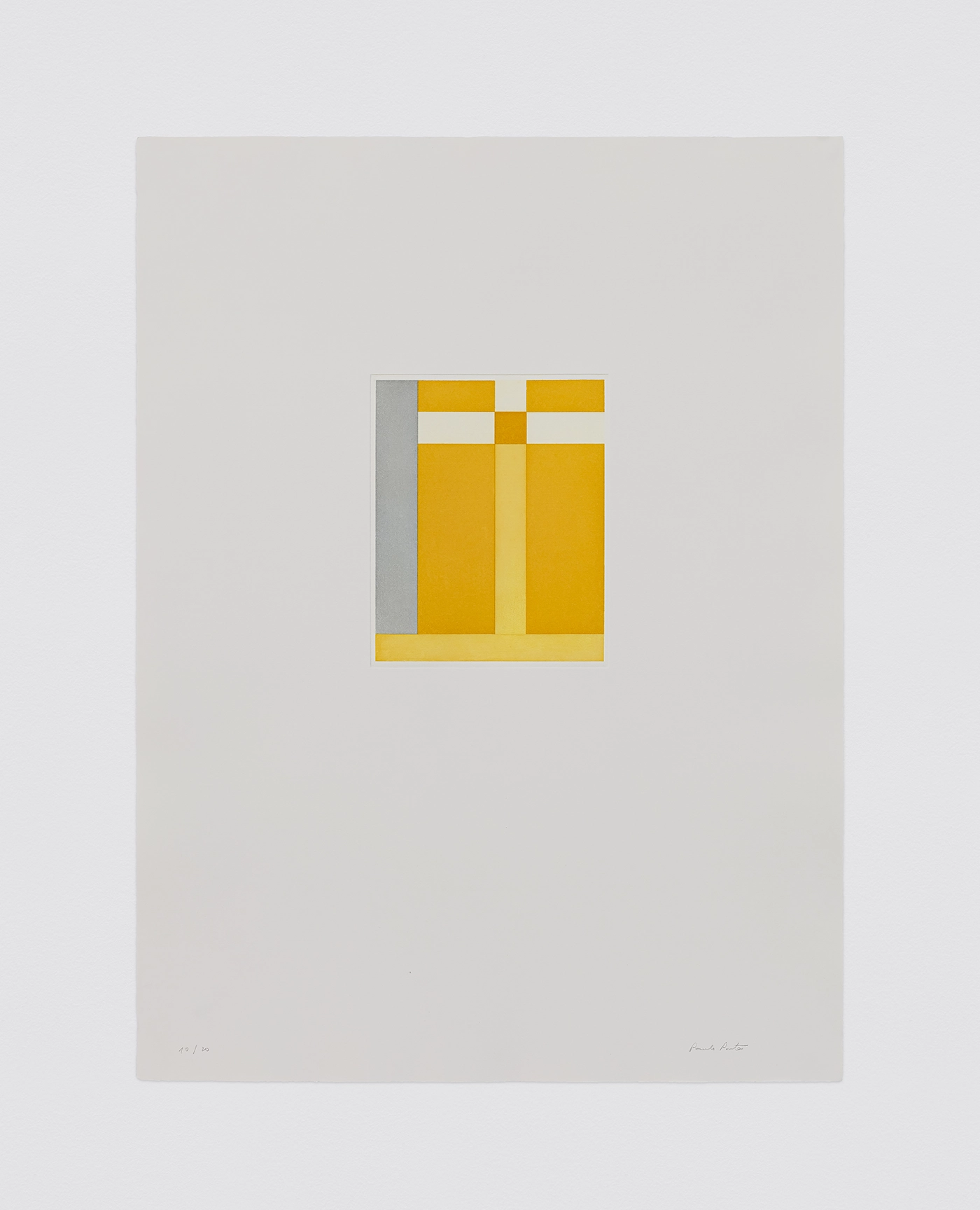
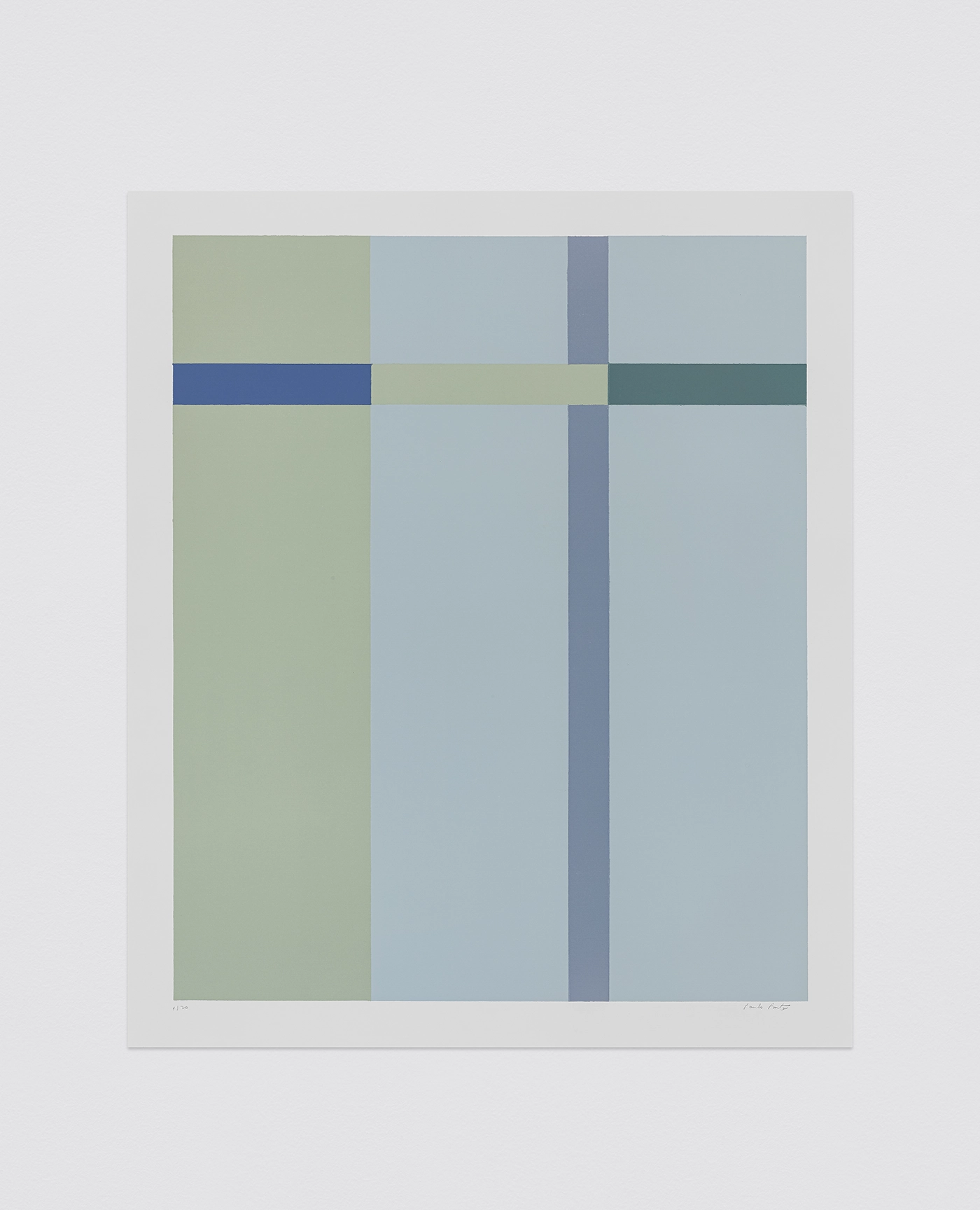
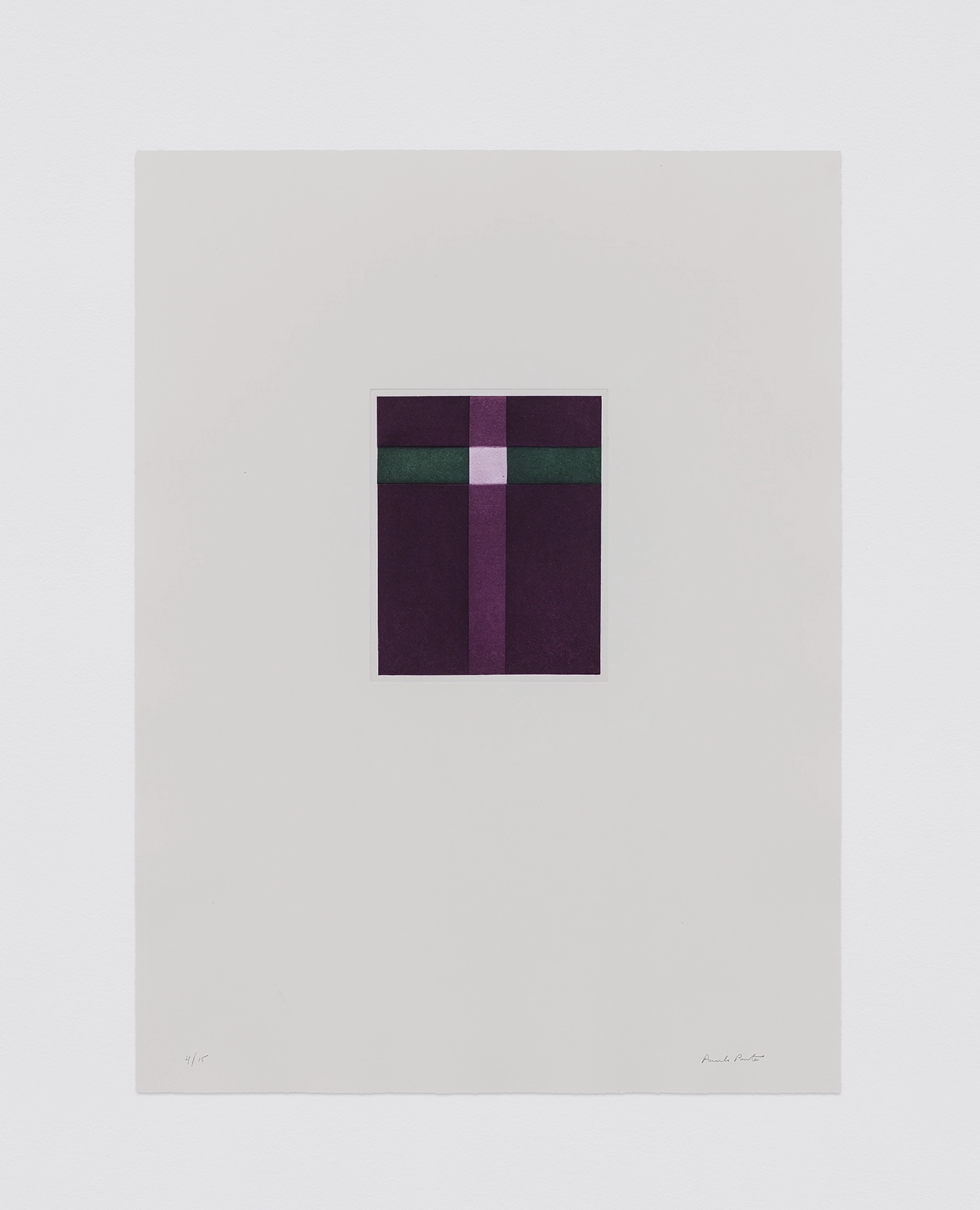
First of all, the constructive method of the two languages is not the same. The Barcelona prints do not reproduce already existing paintings. They are autonomous. The spatial structuring, in the case of the print, attempts to balance the chromatic order that runs from the opaque to the incandescent, drawing on the architectural orthogonality of his painting, but suppressing the relief of the canvases. It creates colors through the chemical processes of lithography and metal engraving, which retain the ink and reveal a velvety texture on the paper.
The meaning is clear: this construction radiates a tempered, serene vibration. From it result compositions that are shelters against the stridency of the contemporary world. In this Barcelona series, Pasta draws on the same themes as his painting (crosses, portals) without replicating the chromatic overlaps of the canvases. The language is different, the technique is different, but the artist’s integrity is the same.
The slow, solid changes that have characterized his art for more than 40 years announce, in the series of Catalan prints, a transition close to the one described by Walter Benjamin in his posthumous book The Arcades Project. In it, the German philosopher reflects on the advent of a new society, born with the architecture of the Parisian arcades, the forerunners of shopping malls.
In Pasta’s case, this “passage” toward a new, more attentive and sensitive society occurs through color: the overlapping of historical periods is translated through a physical palette that comes from the post-Impressionist Pierre Bonnard, passes through Richard Diebenkorn, and reaches Brice Marden — that is, it follows the chromatic mutation that begins in the 19th century, passes through Matisse’s American disciple, and arrives at the contemporaries.
As for the forms, what looks like the Christian cross in these prints is, in fact, an orthogonal arrangement of a vertical line supporting a horizontal one — that is, it follows the same principle that guided Piet Mondrian, a century ago, in building his harmonious universe, and that paved the way for the bands of the Irish artist Sean Scully.
It is unnecessary to recall that Pasta, besides being a painter, is a great master who studied all these painters and found his own path by reflecting on the physical presence of color and its immaterial correspondence through saturation. As his Catalan prints show, Pasta’s “passage,” represented by his portals, invites the viewer to enter a silent world of contemplation.
By exchanging a metaphysical repertoire for a simpler one in the 1980s, concluding that the surface of the canvas was what mattered, Pasta arrived at the 1990s with an affirmative painting of disconcerting topographic flatness. Over the past three decades, he has won a new audience, both in Brazil and abroad, with his chromatic density that does not hide the forms of the world. Rather, it reveals these forms, which seem eclipsed by light, because colors, after all, hold that light within them. They are light itself, emanating from the physical palette and undergoing mutation. It is the light of Andrei Rublev’s icons, of Rembrandt’s sacred figures, of Matisse’s interiors, and now, of these Barcelona prints.
Antonio Gonçalves Filho
Works
Untitled
Paulo Pasta, 2025
Untitled
Paulo Pasta, 2025
Untitled
Paulo Pasta, 2025
Untitled
Paulo Pasta, 2025


